Incorporating Indigenous Perspectives into the Curriculum – By Hannah Smith
At Marist Sion College, we have been focusing on how to build connection and recognising that the best learning happens through strong relationships. I often think of Aboriginal and Torres Strait Islander Peoples when I hear this. Our First Nations Peoples, custodians of the world’s oldest continuing living Culture, have a belief system and Culture deeply grounded in relationships, connection and stewardship of the land.
From a Food Technology teacher’s perspective, building connection with learners is part of the job, but it is so much more important than that. Our learners are the future of food. They are the change-makers who can help create a more sustainable food future. I often wonder what I can spark in our classrooms that may influence the food systems of future generations.
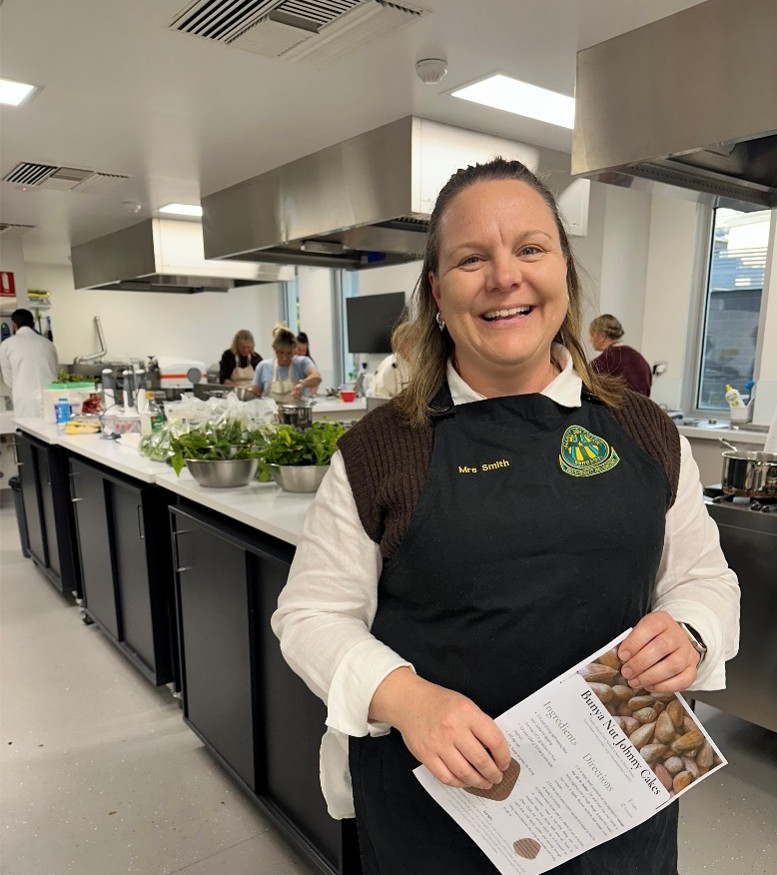
Recently, I had the opportunity to present a practical, hands-on cooking workshop that encouraged collegial conversations about incorporating Indigenous perspectives into the curriculum and celebrated ways to authentically embed Aboriginal and Torres Strait Islander knowledge into our classrooms.
Presenting at the Home Economics Victoria Food and Health Day, I shared with teachers from across the state how Food Technology classrooms can be at the heart of learning about some of the oldest foods in the world and their “unique and inseparable part of one of the world’s longest surviving civilisations” (Woods, 2024). We explored how food classes can incorporate Indigenous perspectives so that learners can:
- appreciate and understand the significance of connection to Country through food
- investigate the unique flavour profiles and rich nutritional properties of native foods
- develop confidence in incorporating native ingredients into everyday cooking
- consider how they can engage with the land and its ancient Culture through a food lens.
Participants prepared recipes such as Warrigal Greens pesto using produce grown at our school. Other native ingredients we explored included bunya nuts, saltbush and pepperberries. The session emphasised accessible, budget-friendly Indigenous ingredients, connections to Country and transferable culinary skills that teachers could readily implement in their own classrooms. Participants collaborated on lesson ideas, examined resource materials and discussed ways to integrate texts such as Karkalla at Home by Mindy Woods into practical, student-friendly learning experiences.
Building on this work, I also hosted a professional learning cultural workshop at Marist Sion College. This provided staff with an opportunity to reflect, in a small-group setting, on what incorporating Indigenous perspectives looks like within their own classrooms. As an example from the Food Technology space, staff participated in tasting native ingredients grown on our school grounds and engaged in thoughtful conversations about how we can respectfully and authentically embed Indigenous perspectives into our curriculum areas. This learning helps build teacher confidence, strengthens cultural awareness and highlights the importance of connection through an Indigenous perspective.
As our school continues its curriculum development journey, I look forward to further opportunities to deepen my understanding of the important relationships Aboriginal and Torres Strait Islander Peoples have with Country, Place and Culture through traditional food knowledge, sustainability practices and the cultural significance of preparing and sharing meals together. I seek to listen, learn and engage deeply with Indigenous perspectives, and to bring those learnings back to our classrooms in meaningful ways.
In Food Technology, we are committed to educating our students to become thoughtful and responsible food citizens through culturally responsive teaching and learning programs. By strengthening respectful connections between Aboriginal and Torres Strait Islander Peoples, food, Culture and Country, we can help students develop not only practical skills, but also a deeper understanding of Australia’s rich First Nations knowledge systems. When we create opportunities for students to learn through Indigenous perspectives, we are not simply enriching our curriculum. We are nurturing connection, respect and stewardship, qualities that will help shape a more sustainable and inclusive future for the generations to come.
Hannah Smith
Learning Leader – Technology
This work was written on the traditional Country of the Kurnai People. I acknowledge the Kurnai People as the Traditional Custodians of this land and pay my respects to Elders past and present. I recognise the ongoing connection of Aboriginal and Torres Strait Islander peoples to Country, waterways, culture, food knowledge, and community, and acknowledge that these knowledges continue to enrich teaching and learning today.
Reference: Woods, M. 2021, Karkalla at home: Daily recipes inspired by nature, Murdoch Books, Sydney.